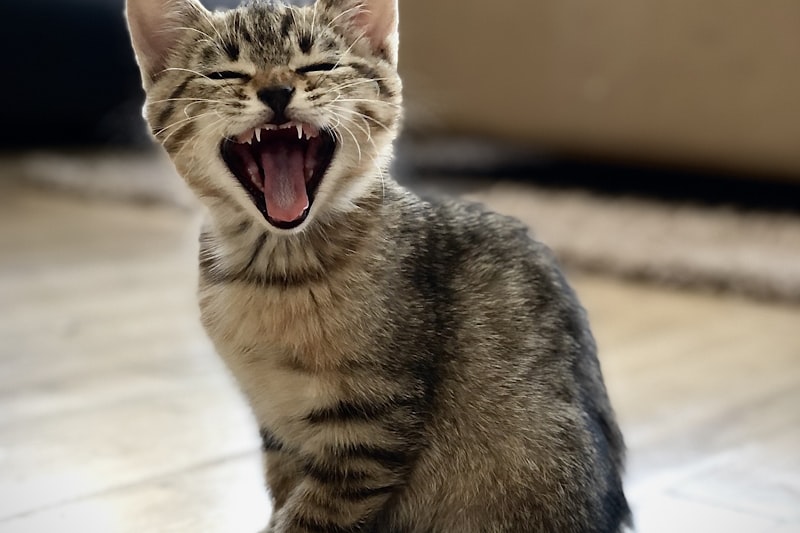
Indoor cats live in a world defined by your choices. The furniture arrangement, the light cycle, the sounds of your morning — all of it shapes how your cat moves through the day. And yet, most of us give very little thought to designing that world with intention.
This guide isn't about expensive products or elaborate enrichment setups. It's about understanding what your cat needs across a typical day, and making small, considered adjustments that benefit both of you.
Understanding Your Cat's Natural Rhythm
Cats are crepuscular by nature — most active at dawn and dusk, with rest periods in between. This biological clock doesn't disappear indoors; it just becomes compressed, redirected, or — if the environment doesn't support it — suppressed into low-level anxiety.
A well-designed indoor environment works with this rhythm. It creates natural windows of activity, rest, and feeding that approximate the cycle a cat would follow outdoors. When your home supports this pattern, you'll notice the difference: less vocalisation, more confident movement, longer deep sleeps.
A home that respects a cat's rhythm doesn't just calm the cat. It tends to calm the person living with them too.
Morning: The Gentle Start
Your cat almost certainly wakes before you. The hour before your alarm is a period of low light and quiet movement — an ideal time for their first exploration. If possible, avoid rushing directly into high stimulation (loud TV, kitchen noise, doors opening and closing). Let the morning build.
Consider feeding your cat at a consistent time each morning — ideally within 30 minutes of waking. Predictability is one of the most underrated forms of enrichment for cats. It reduces cortisol. It tells them the world is manageable.
Simple morning adjustments:
- Open curtains or blinds incrementally — cats track light the same way they track prey movement
- Speak quietly and move slowly in the first 20 minutes
- Offer breakfast at the same time daily, using the same bowl placement
- Provide a warm perch near a window for their first sunbathing opportunity of the day
Afternoon: The Enrichment Window
Mid-morning to early afternoon is typically a rest period. But within that rest, there are natural waking moments — brief activity bursts that, if engaged well, provide essential stimulation.
This is the ideal time for structured play. Not forced interaction, but an offer: a wand toy left near their favourite spot, a foraging puzzle with a few pieces of kibble, a cardboard box left out from a delivery. Low effort on your part, meaningful stimulation for them.
The key is variation. Cats are hunters; novelty matters. Rotate toys rather than leaving them all available simultaneously. A toy they haven't seen for two weeks is, functionally, a new toy.
Evening: The Wind-Down Ritual
As your day winds down, your cat's second energy peak often arrives. This is the dusk hunting window — the period when, left outside, they would be most intensely active. Indoors, this energy needs somewhere to go.
A 10–15 minute structured play session before your own dinner is one of the highest-impact interventions you can make for an indoor cat's wellbeing. Move the toy in patterns that mimic prey — erratic, fast, then still. Let them catch it. Let them "kill" it. This satisfying resolution to the hunt cycle has a measurably calming effect.
After play, offer a small meal or treat. This mimics the natural hunt-catch-eat-groom-sleep sequence. Many cats will groom themselves after eating, then settle into their deepest sleep of the night.
Creating Space That Supports Calm
Beyond the daily rhythm, the physical environment itself communicates safety or threat to a cat. A few principles:
- Vertical space matters as much as floor space — cats feel safest with elevation. A tall bookshelf, a wall-mounted platform, or a cat tree positioned near a window can dramatically change how a cat uses a room
- Hiding spots should be accessible at all times — not as concessions but as essential resting infrastructure. A cat that cannot hide when they need to is a stressed cat
- Litter placement deserves more thought than most owners give it. Quiet, low-traffic corners; never near feeding areas; ideally not in enclosed spaces with only one exit
- Consistent scent is calming — avoid frequent deep-cleaning with strong chemicals in your cat's primary resting areas. Their scent being present means safety
When Routine Breaks: Adapting to Change
Building routines is valuable precisely because change is inevitable. Guests, renovations, a new pet, a change in your own work schedule — all of these disrupt the environmental stability your cat relies on.
When change is coming, preparation matters more than response. If you're moving, bring a piece of furniture or a blanket that carries your cat's scent first. If guests are coming, create a clearly accessible safe room before they arrive. If your schedule is shifting, adjust feeding times gradually over a week rather than abruptly.
The underlying principle: give your cat agency. A cat who can choose when to engage and when to withdraw is a cat who rarely needs to communicate distress.
The Deeper Practice
What we're really talking about, underneath all of this, is attention. Paying attention to your cat's signals. Paying attention to your home's rhythms. Paying attention to the small moments — the way they greet you at the door, the specific corner they've chosen this week, the sound they make when they're genuinely content.
Companion living, done well, is a practice. It asks something of us beyond food and vaccinations. It asks us to be present — and to design our shared environment with the kind of care we'd want someone to extend to us.